When Peter discharged from the hospital to the rehabilitation center
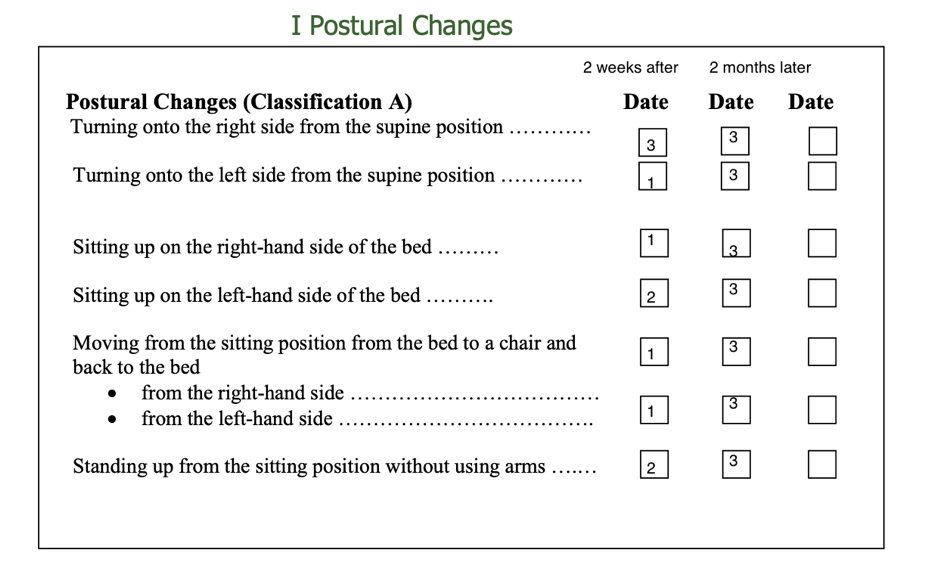
After two weeks Peter’s postural changes have improved and the performances are carried out safely in a controlled way without assistance (level 3). Watch the following video and measure Peter’s sitting and standing balance after 2 weeks post stroke by using the PCBS test. Give the points and write a short summary about his balance ability. Peter’s PCBS test 2 weeks after stroke.
For this task use the PCBS test form below.

In summary, the patient has demonstrated progress since the initial PBCS test two weeks ago. The pushing has been corrected from the initial assessment (the patient was not able to maintain sitting position during one minute). Increasement of postural changes, sitting balance and static standing position has been showed, however, independence of standing is lost with a reduction of base of support or when performing multitasking. The patient obtained a final score of 37 out of 65.
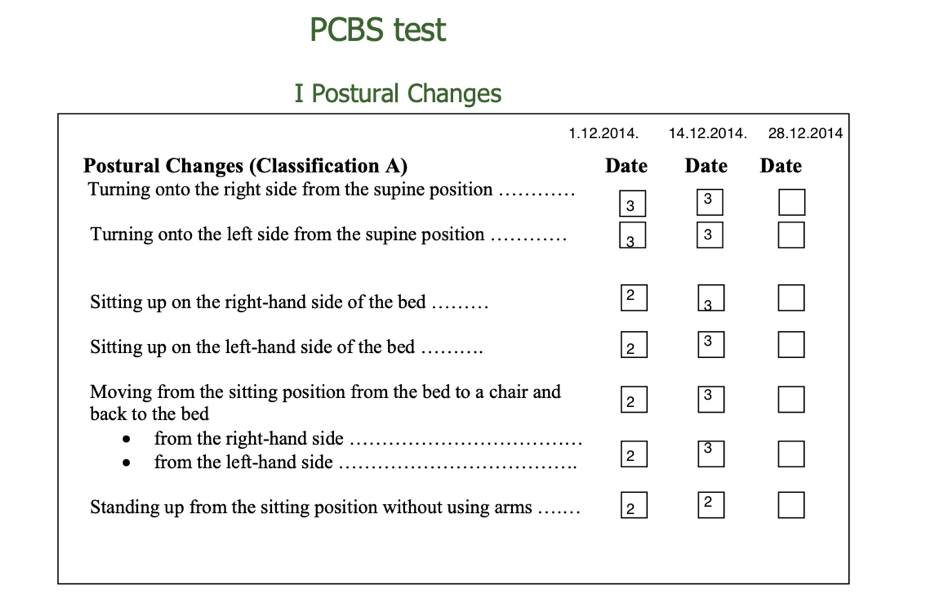
Regarding to posture changes, the patient is independent and fluent, except of sit to stand, he still needs arms support to get up and accomplished the movement (20 points or classification 3).

Regarding to sitting balance, the patient has a good control of balance and is able to perform all tasks recommended (13 points or classification 3).
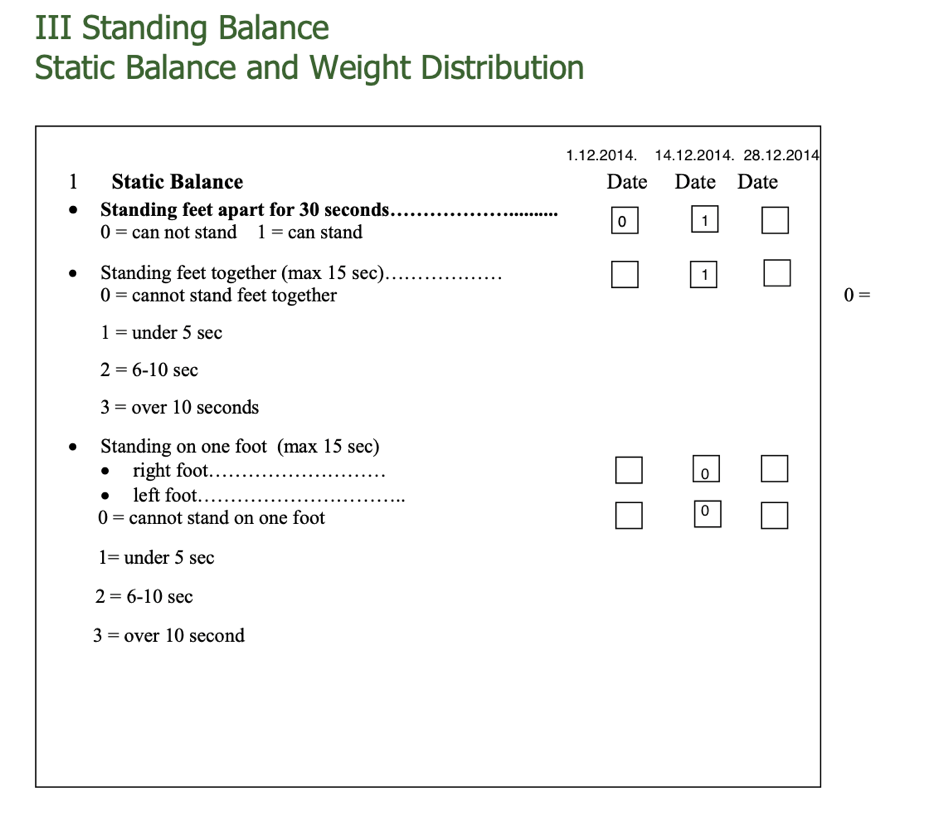
Regarding to standing balance and specifically to static balance, the patient has difficulties in controlling static balance (2 points). He is not able to standing on one foot without support and cannot handle standing feet together for 15 seconds.
Regarding to dynamic standing balance, the patient is unable to control dynamic balance (4points). He is in distress when he is bending down to pick up an object from the floor and he is unable to do it without high falls risk. Indeed, he has lost his balance involved more body weight on the left side (non-healthy limb) and widen base of support using the left arm. Touching a mark spot with the elbow required aid of arm support between repetitions on the right side, whereas, on the left side, the patient is unable to control his balance and ensure his own safety to prevent risk of falls. Thus, reaching up an object was not tested. Additionally, the patient is not able to turn 360° degrees in place without losing the balance and falling. Therefore, the patient demonstrates moderate control of balance touching a marked spot to the right, however is unable to perform all other test components independently.
 Jehanne Crouzier